


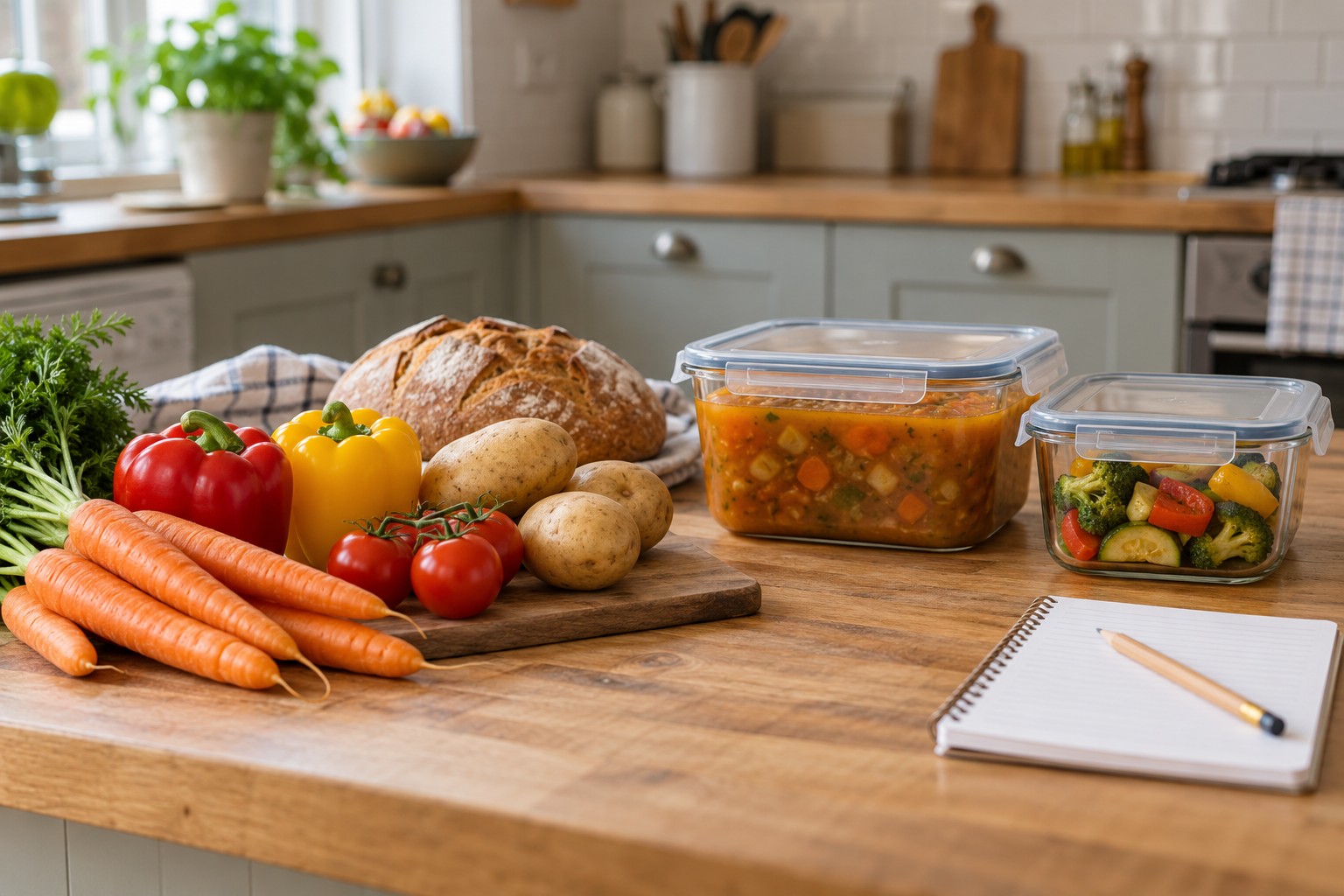
Learning how to reduce food waste at home often starts with something familiar: finding a bag of spinach behind the milk or buying another jar of sauce when there are already two in the cupboard.
Most people do not intend to throw food away. Plans change, portions turn out larger than expected and ingredients disappear behind newer shopping. By the time you remember them, it is too late.
You do not need a complicated meal planner or a kitchen full of matching containers to improve things. A few changes to how you shop, store food and decide what to cook can help you use more of what you bring home.
How to Reduce Food Waste at Home Before Your Next Shop
The most useful place to start is your own kitchen. Before writing a shopping list, take a few minutes to check the fridge, freezer and food cupboards.
You are looking for three things: ingredients that need using soon, food you already have enough of and anything that could become a meal with one or two additions.
Ireland’s Stop Food Waste programme recommends planning around the food you expect to eat and avoiding fresh-food offers unless you will actually use them. Its meal-planning advice is a useful starting point.
1. Check What You Have Before Deciding What to Cook
It is tempting to choose recipes first and shop for every ingredient afterwards. That can leave perfectly useful food sitting untouched.
Try doing it the other way around.
If you have half a bag of carrots, some potatoes and an unopened tin of beans, start there. You might only need a few additional ingredients for dinner.
Keep the check short enough that you will repeat it. You do not need to catalogue every spice jar. Open the fridge, look through the freezer and check the shelves where duplicate purchases tend to gather.
If finding ingredients is the difficult part, our guide to organising kitchen cupboards without buying more storage can help make those checks easier.
2. Plan for the Evenings You Will Actually Be Home
A seven-day meal plan looks organised until somebody works late, a friend suggests dinner or Tuesday’s leftovers stretch into Wednesday.
Before choosing meals, check your week.
How many evenings will you cook? Will anyone be away? Is there a night when you usually need something quick?
Plan around those answers. Leave some flexibility rather than buying fresh ingredients for a different recipe every evening.
A freezer or cupboard meal can cover an uncertain night without adding another pack of fresh food that needs using immediately.
Better Shopping Habits for Less Food Waste
3. Give Fresh Ingredients More Than One Job
An ingredient bought for one recipe can become difficult to finish, especially when you are cooking for one or two people.
Before adding it to your list, think about a second use.
Peppers might work in a traybake and a pasta sauce. Carrots could go into a soup as well as a roast dinner. A loaf might cover breakfast and packed lunches, with a portion frozen before it becomes surplus.
The aim is not to eat the same meal repeatedly. It is to avoid buying several ingredients that each depend on one very specific dinner happening.
4. Treat Bigger Packs as a Decision, Not an Automatic Saving
A lower price per kilogram can look appealing, but the saving depends on how much you use.
Before choosing the larger pack, ask:
- Will we finish it in time?
- Can part of it be frozen safely?
- Do we have room to store it?
- Are we buying it because we need it or because it is on offer?
Sometimes the smaller pack makes more sense.
The same applies to multipacks and fresh-food promotions. Two bags of salad are only useful if there is a realistic plan for both.
How to Reduce Food Waste at Home With Better Storage
5. Make Food That Needs Using Easy to See
Food at the back of a crowded fridge is easy to forget.
When unpacking shopping, move suitable older items towards the front and place newer ones behind them. Keep a visible area for food that needs attention soon, while maintaining safe separation between raw and ready-to-eat foods.
That might include an opened sauce, vegetables intended for tomorrow’s dinner or a covered portion of leftovers labelled with the date.
Follow packaging instructions rather than assuming every item belongs in the same place. Safefood recommends keeping the fridge at 5°C or below and following the storage directions on food labels. Its food-waste and storage guidance explains the basics.
6. Understand What Food Dates Mean
“Use by” and “best before” have different purposes.
A use-by date concerns safety. Do not eat food after that date, even if it appears normal. Correct storage and any instructions about eating the product after opening still matter.
A best-before date concerns quality. Passing it does not automatically mean a product must be discarded, but you should assess the food appropriately and follow its storage instructions.
Safefood’s guide to use-by and best-before dates explains the distinction.
Knowing how to reduce food waste at home includes recognising when food should be discarded. Cutting waste should never depend on ignoring safety advice.
7. Freeze Food While You Still Have a Plan for It
The freezer is useful when you know you have bought or cooked more than you need. It is less useful when it becomes a collection of unlabelled containers.
Check that the food is suitable for freezing and follow its instructions. Freeze it while it is still safe, rather than waiting until you are uncertain about its condition.
Label portions with the contents and date. Choose portions you are likely to use: one lunch, two servings of sauce or enough bread for the next few breakfasts.
Before buying more frozen food, look at what is already there. A full freezer does not help much if nobody remembers what it contains.
Make Cooking Match Your Household
8. Measure the Foods You Regularly Overcook
If you always have too much pasta, rice or couscous, the problem may simply be the starting quantity.
Measure what you use next time and note whether it suits the people eating. Packaging guidance can provide a starting point, then you can adjust for your household.
There is nothing wrong with cooking extra deliberately. The useful distinction is whether the extra portion has a purpose.
A planned lunch is different from another container placed in the fridge with no idea when it will be eaten.
9. Decide What Leftovers Will Become
“Someone will eat it” is not much of a plan.
Before putting leftovers away, decide who will use them and when. Label the container so nobody has to guess what it holds or how long it has been there.
Depending on the food, tomorrow’s lunch might need only a small addition. Cooked vegetables could become part of a soup or omelette, while a suitable leftover sauce could form the basis of another meal.
Cool and store cooked food promptly, following food-specific safety guidance. Keep track of storage times and reheating instructions. If you cannot use a suitable portion in time, consider freezing it while it is still safe.
A Simple Weekly Routine to Keep Food Waste Down
You do not have to change everything at once. Choose the part of the week where food is most often forgotten.
| When | What to do |
|---|---|
| Before shopping | Check what is already in the fridge, freezer and cupboards |
| While planning meals | Include ingredients that need using and allow for changed plans |
| When unpacking | Put suitable older items where you can see them |
| After cooking | Decide when extra portions will be eaten and label them |
| Before the next shop | Notice what remains unused and buy less of it next time |
This last step is easy to overlook. If you throw away the same item every week, change the quantity you buy or stop buying it for a while.
A large bag may suit the household you imagine cooking for. A smaller one may suit the week you actually have.
For other ways to make everyday kitchen routines more efficient, read our comparison of dishwasher use and washing up by hand.
Frequently Asked Questions
What is the easiest way to reduce food waste at home?
Check your kitchen before shopping and plan your next few meals around food that needs using. This can prevent duplicate purchases without requiring a detailed weekly schedule.
Does meal planning have to cover every day?
No. A flexible plan for the days you expect to cook can be more practical. Leave room for leftovers, changed plans and meals made from freezer or cupboard ingredients.
Should I buy bigger packs to save money?
Only when you can use or safely store the extra food. Compare the amount you expect to eat, not just the price per kilogram.
Can food be eaten after its use-by date?
No. Use-by dates concern safety. Follow the date, storage instructions and any directions about how soon the product must be eaten after opening.
Do I need special containers to cut food waste?
You may already have suitable food-safe containers. Prioritise secure storage, clear labels and portions you will use before buying more equipment.
What if I keep throwing away the same food?
Treat that as a shopping clue. Buy a smaller quantity, choose a different format or leave it off the list for a week. Learning how to reduce food waste at home is often about adjusting ordinary purchases rather than finding increasingly inventive ways to use unwanted ingredients.
