


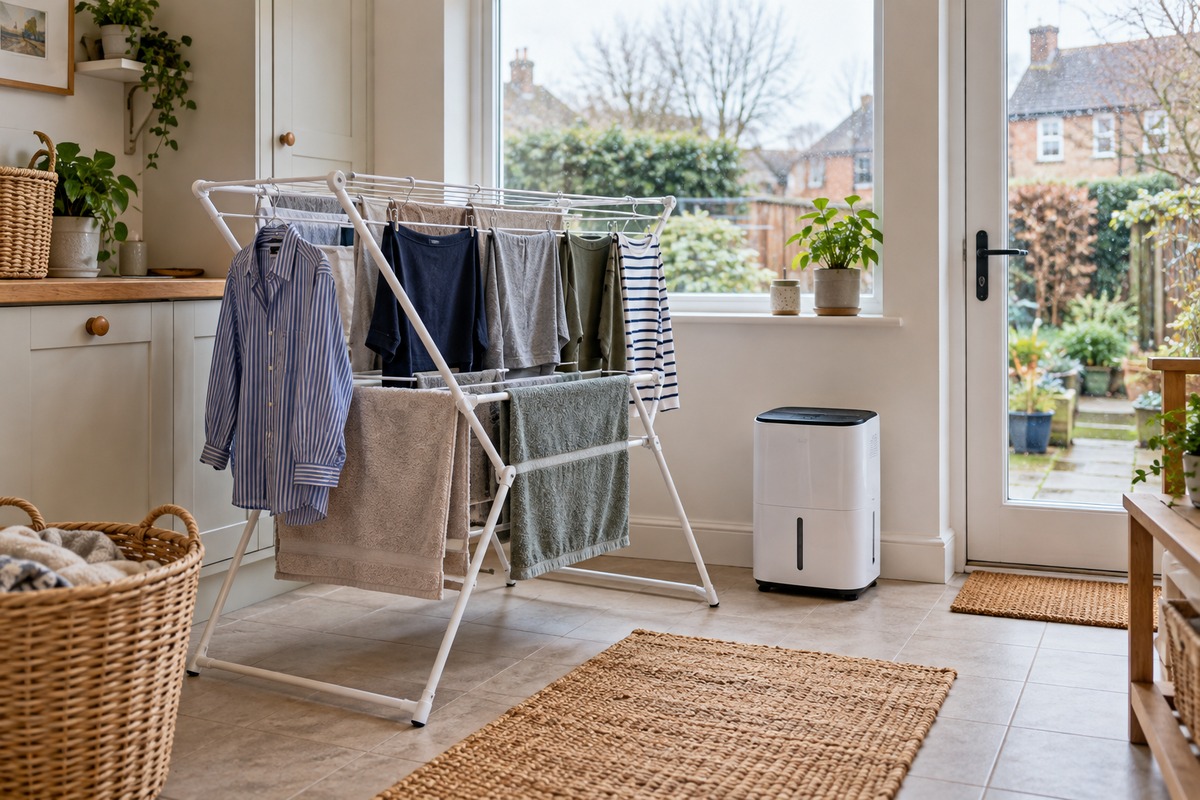
Wet weather, shorter days and limited outdoor space can make winter laundry difficult. A washing line is not much use during a downpour, and running a tumble dryer for every load may not suit your household budget.
For many UK households, an indoor airer becomes a familiar part of the furniture between autumn and spring. The problem comes when clothes stay damp for too long or windows start collecting water.
To dry clothes indoors in winter, you need to manage both the washing and the moisture it releases. Giving garments enough space helps, but the room also needs a suitable way to deal with that moisture.
You do not necessarily need another appliance. Start with your washing machine settings, the position of your airer and the ventilation already available in your home.
Quick Answer: How Do You Dry Clothes Indoors in Winter?
Use a fabric-appropriate spin setting, spread garments out on an airer and choose a room where you can manage ventilation. Avoid covering radiators or placing wet washing against cold walls. A suitable dehumidifier can help collect moisture, but a heated airer alone does not remove it.
The aim is to dry the washing while preventing moisture from building up elsewhere in the home.
Why Does Drying Clothes Indoors Cause Condensation?
When wet clothes dry, water evaporates from the fabric into the surrounding air.
If that moisture remains indoors, it can collect as droplets on colder surfaces. Windows are often the first place you notice it, although condensation can also develop around window frames and in less visible corners.
Cooking and showering add moisture too. A busy household may therefore have several sources operating at once, particularly during evenings when windows are closed.
Energy Saving Trust’s ventilation guidance explains how controlled airflow helps manage indoor moisture and reduce the risk of condensation. energysavingtrust.org.uk
Indoor drying is easier to manage when you consider the whole room rather than concentrating only on how warm the clothes feel.
Use the Right Spin Setting Before Hanging Clothes
Your drying routine begins before you take the washing out of the machine.
Check the spin setting selected by your wash programme. A gentle cycle may leave more water in the fabric than a programme intended for everyday cotton clothing.
Always follow the garment labels and your machine’s instructions. Delicate fabrics may need a lower spin speed, even if that means allowing longer for drying.
Avoid Overloading the Drum
An overloaded machine may struggle to wash and spin the load effectively.
Follow the capacity guidance for the programme you are using. A machine’s advertised maximum capacity does not necessarily apply to every cycle.
If washing regularly comes out unusually wet, check the load size and settings first. Persistent changes in performance may need further investigation.
Our guide to keeping appliances running longer without overspending covers practical considerations when reviewing maintenance and repairs.
Consider an Additional Spin When Appropriate
If suitable fabrics remain very wet after washing, an additional spin may help remove more water before you hang them.
However, this should be a considered adjustment, not an automatic extra cycle for every load. Check the fabric requirements and investigate recurring problems with the machine.
Give Clothes Enough Space on the Airer
Packing every rail tightly can leave you with clothing that feels dry on the outside but remains damp around seams and folds.
Shake out garments before hanging them. Straighten sleeves and avoid leaving large items twisted or bunched together.
Leave gaps between items so air can reach more of the fabric. Thick towels may need more space than lightweight tops.
Hang Shirts and Tops Separately
Suitable hangers can help spread out shirts and lightweight clothing without filling every rail on your airer.
Use a stable hanging arrangement and keep it away from doorways and walking routes. Do not hang wet clothing inside a closed wardrobe.
Check Thick Sections Before Putting Clothes Away
Waistbands, pockets, cuffs and towel edges can remain damp after thinner sections have dried.
Check these areas before folding the washing. If necessary, turn the item or reposition it so the remaining damp section is exposed.
Putting clothing away too soon can leave it smelling musty and may mean washing it again.
Choose a Room Where You Can Manage Moisture
The best drying space is not automatically the warmest room.
Look for somewhere with enough room around the airer and access to suitable ventilation. A working extractor or accessible window can make moisture easier to manage.
Avoid squeezing washing into an enclosed cupboard or placing it directly against a cold external wall.
A bathroom may be practical in some homes, but it already receives moisture from showers and baths. Its suitability depends on space, ventilation and how the room is used.
Drying Clothes in a Small Flat
If you cannot dedicate a room to laundry, focus on making the available space work better.
Dry manageable loads, leave gaps between garments and avoid having several wet loads hanging at the same time.
A vertical or folding airer can reduce the floor space needed. However, its advertised capacity is useful only if you can still arrange clothes without crowding them.
Keep the airer clear of heaters, electrical equipment and frequently used walkways.
Keep Ventilation Working During Cold Weather
It can be tempting to close every vent when outdoor temperatures fall. However, moisture still needs a route out of the home.
Use installed ventilation systems as intended. Keep trickle vents unobstructed and use working extractor fans when cooking or bathing.
Where it is safe and practical, opening a window can help boost ventilation. The amount needed varies with the weather, room and ventilation system; there is no single opening time that suits every property.
Ventilation also needs to be considered alongside efforts to keep the house comfortable. Our guide to keeping your home warm without turning up the heating explores practical changes to draughts, curtains and radiator placement.
Avoid Drying Washing Directly on Radiators
Draping clothing over radiators can obstruct heat reaching the room.
It also releases moisture into the surrounding air without providing a way to remove it. Turning up the heating may make the washing warmer, but it does not solve a ventilation problem.
Use a freestanding airer with suitable clearance instead. Follow the safety instructions for any heating appliance nearby.
Never cover a portable electric heater with clothing or use it as a drying rack.
Can a Dehumidifier Help Dry Clothes Indoors?
A dehumidifier removes moisture from the air and collects it in a tank or drains it away, depending on the appliance.
It can be useful when indoor drying is a regular part of your routine. Energy Saving Trust includes dehumidifiers among the options for managing excess moisture and helping dry washing indoors. energysavingtrust.org.uk
Follow the manufacturer’s guidance on placement, operating conditions and clearance. Keep the appliance away from dripping clothing, and empty or maintain it as instructed.
Its effectiveness will depend on the room, temperature, laundry load and appliance. A dehumidifier also does not replace the fresh-air ventilation your home needs.
Check Running Time as Well as Power
When estimating electricity use, consider how long the appliance runs.
Multiply its power in kilowatts by the operating time in hours, then multiply by your electricity unit rate. This gives a basic estimate, although actual consumption may vary during operation.
A lower power rating does not automatically mean a lower cost for a complete drying session.
Does a Heated Airer Solve the Moisture Problem?
A heated airer warms clothing, but moisture still enters the room as the fabric dries.
You therefore need to consider ventilation or moisture collection alongside using the airer.
Follow the manufacturer’s loading and safety instructions. If it has a purpose-made cover, use that cover only as directed rather than improvising with other materials.
Whether it suits your household depends on your available space, usual laundry load and drying routine. Avoid assuming it will always be cheaper than every alternative.
The same habit of comparing how you actually use appliances is useful when considering whether a dishwasher is cheaper than washing up by hand.
Make Use of Suitable Outdoor Drying Days
Winter does not rule out every opportunity to use an outdoor line.
When conditions are dry and suitable, hanging washing outside for part of the day can reduce the amount of moisture you bring indoors later.
Check the forecast and bring clothes in before rain arrives. Judge whether they are dry by checking the fabric, particularly thicker sections, rather than relying on time alone.
Even partial outdoor drying can make the indoor stage more manageable.
Investigate Damp That Keeps Returning
Do not assume every damp patch is caused by your washing.
Leaks and other building problems can also contribute. Persistent damp, damaged finishes or recurring mould need their cause investigated.
Renters should report recurring issues to their landlord or managing agent. Homeowners may need a suitable professional to assess the problem.
Changing a laundry routine can help manage moisture, but it should not become a substitute for repairing a fault.
For more practical household guides, visit Stokes.
Frequently Asked Questions
Is It OK to Dry Clothes Indoors in Winter?
Yes, provided you manage the moisture released. Give garments enough space and use suitable ventilation or moisture collection rather than leaving washing in an enclosed room.
Why Do My Clothes Take So Long to Dry Indoors?
Possible reasons include crowded rails, limited airflow and too much water remaining after spinning. Thick fabrics and folds can also take longer than lightweight clothing.
Should I Open a Window When Drying Washing?
Opening a window can help boost ventilation where it is safe and practical. Consider the weather and your home’s existing ventilation rather than following a fixed opening time.
Is a Dehumidifier Better Than a Heated Airer?
They perform different jobs. A heated airer warms the washing, while a dehumidifier collects moisture from the air. The more suitable option depends on your room and drying needs.
Can I Dry Clothes in My Bedroom?
If that is your only practical space, keep washing away from cold walls, avoid overcrowding and manage ventilation. Consider another arrangement if the room develops persistent condensation or damp.
How Can I Tell Whether Clothes Are Completely Dry?
Check thick seams, waistbands, cuffs and pockets as well as the main fabric. Allow damp sections to finish drying before putting clothing away.
