


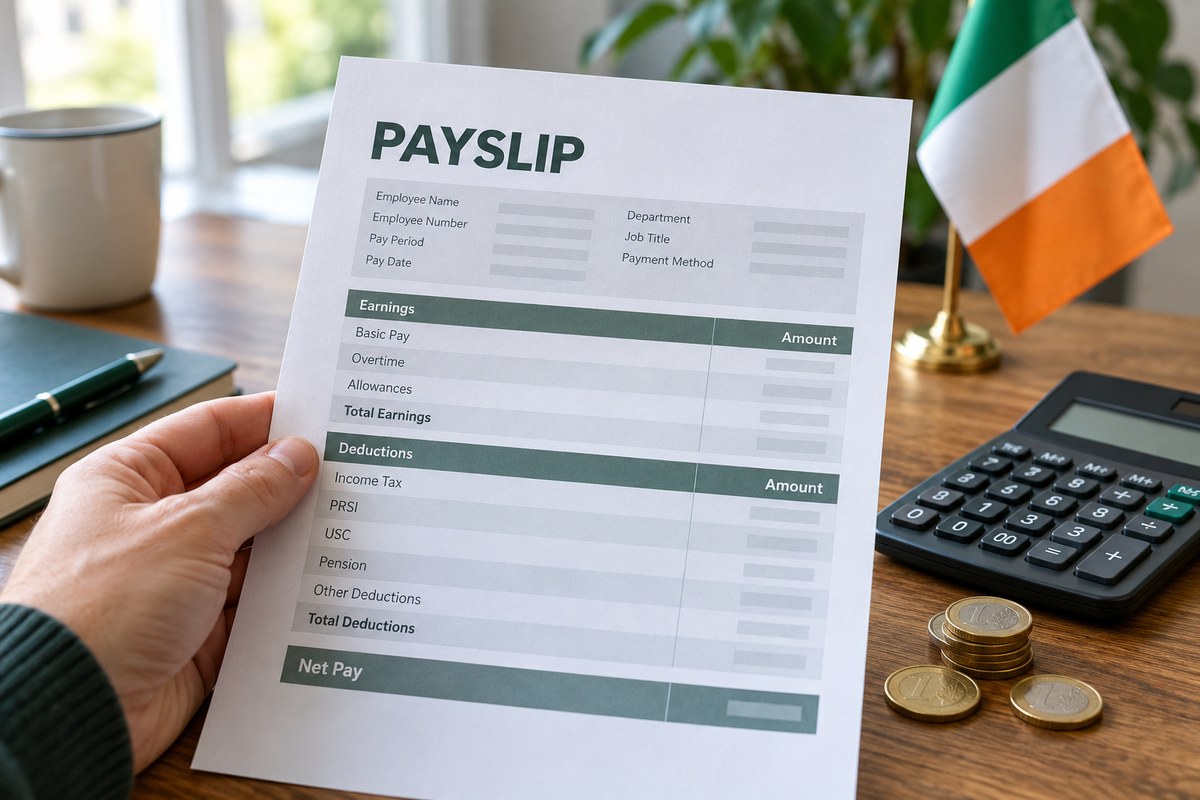
Many workers in Ireland will pay slightly more PRSI from today, as the standard Class A employee contribution rate rises from 4.20% to 4.35%.
The change takes effect on 1 October 2026. For an employee whose full reckonable pay is subject to the standard rate, it means an additional €1.50 for every €1,000 of pay.
The Department of Social Protection’s official rate table confirms the increase. Lower-paid workers have different rules, so the new percentage should not be applied automatically to every payslip. gov.ie
Quick Answer: How Much More PRSI Will You Pay?
The standard employee rate increases by 0.15 percentage points. Where the full amount is liable at that rate, multiply reckonable pay by 0.0015 to calculate the additional deduction.
For example, €3,000 of monthly reckonable pay produces an extra €4.50 in employee PRSI. That calculation isolates this change; it does not predict the final take-home pay shown on every employee’s payslip.
How the PRSI Increase Affects Different Salaries
The following examples assume the full monthly amount is subject to the standard Class A employee rate, with no applicable PRSI credit.
| Monthly reckonable pay | PRSI at 4.20% | PRSI at 4.35% | Extra monthly deduction |
|---|---|---|---|
| €2,000 | €84.00 | €87.00 | €3.00 |
| €2,500 | €105.00 | €108.75 | €3.75 |
| €3,000 | €126.00 | €130.50 | €4.50 |
| €4,000 | €168.00 | €174.00 | €6.00 |
| €5,000 | €210.00 | €217.50 | €7.50 |
| €6,000 | €252.00 | €261.00 | €9.00 |
These are calculations using the old and new rates, rather than complete payroll estimates. Income Tax, USC, pension deductions, benefits and other adjustments are outside the table.
What Is PRSI?
PRSI stands for Pay Related Social Insurance. Revenue explains that employers and employees make separate contributions, with the amount determined by pay and the employee’s contribution class.
PRSI is a main source of funding for social welfare payments. The class recorded through payroll also matters for an employee’s social insurance record. revenue.ie
On a payslip, look at the employee PRSI deduction separately from Income Tax and USC. If employer PRSI is also displayed, it should not be confused with the amount deducted from your wages.
Do Lower-Paid Workers Pay the New Rate?
For ordinary Class A employment, the published table retains a nil employee rate on weekly reckonable earnings from €38 to €352.
Above €352, employee PRSI becomes payable. A tapered credit applies between €352.01 and €424, so a simple percentage calculation may not give the correct deduction within that range. gov.ie
Employees with variable hours should compare the actual pay periods involved. A week with extra shifts may produce a different calculation from a quieter week.
Is This a 0.15% Increase or a 0.15 Percentage-Point Increase?
The rate moves from 4.20% to 4.35%, a rise of 0.15 percentage points.
For a reader checking the effect on wages, the useful calculation is the difference between those rates. On €1,000 of fully liable pay:
- Previous deduction: €42.00.
- New deduction: €43.50.
- Additional deduction: €1.50.
It would be misleading to describe this as a 4.35% reduction in take-home pay. The previous rate already applied; the October change adds the difference.
What Should You Check on Your October Payslip?
Start with the first payslip processed under the new rates and compare it with a similar previous pay period.
Check the Pay Used in the Calculation
Look for the amount treated as reckonable pay for PRSI. Do not assume every deduction uses the same calculation basis.
If overtime, a bonus or another payment has changed, ask payroll to explain its treatment before attributing the entire difference to the rate increase.
Confirm Your PRSI Class
Ask payroll to confirm the class and subclass being used if they are not clear on the payslip.
Revenue says employers must record each employee’s PRSI class, contributions and contribution weeks. Incorrect records can affect benefit entitlements and should be corrected. revenue.ie
Compare the PRSI Line Separately
A change in net pay can have several causes. Compare the PRSI deduction first, then review Income Tax, USC and any other deductions individually.
This makes a payroll query easier to answer than simply asking why the final payment is lower.
Ask for a Breakdown if the Figures Do Not Match
A useful question is: “What reckonable pay, PRSI class and rate did you use for this deduction?”
Keep the reply with your payslip. If an adjustment is needed, ask when it will appear and how it will be shown.
What About Self-Employed Workers?
The published Class S standard rate also rises to 4.35% from 1 October 2026.
However, self-assessed annual income uses a blended rate because the change occurs during the year. Department guidance lists 4.2375% for 2026 annual income, subject to the applicable €650 minimum annual contribution. Contributions and Classes
Self-employed readers should therefore avoid applying the October rate to the whole year without checking the annual calculation.
Is the Increase a New Budget 2027 Announcement?
The October rate is already listed in the Department’s published tables. It should be distinguished from proposals and announcements relating to the forthcoming Budget.
Readers following those developments can see Stokes’ Budget 2027 Ireland guide.
For household planning, record each change with its effective date. That makes it easier to separate a deduction already operating from a measure announced for a later period.
Frequently Asked Questions
When does the PRSI increase take effect?
The published new rates apply from 1 October 2026.
What is the new standard Class A employee rate?
It is 4.35%, replacing 4.20%.
How much extra is deducted on €4,000 a month?
Where the full €4,000 is liable at the standard rate, the additional employee deduction is €6 a month.
Does every employee pay 4.35%?
No. Contribution class, earnings and applicable credits or exemptions affect the calculation. Contributions and Classes
Is employer PRSI deducted from my wages?
Employer and employee PRSI are separate contributions. The employer’s share is its own contribution. revenue.ie
Where can I check the official rates?
Use the Department of Social Protection’s PRSI Class A rate table and ask payroll to explain the rate applicable to your circumstances.
Rates checked on 1 October 2026. Worked examples isolate the employee PRSI rate change and are not complete take-home-pay calculations.
For more Irish finance and consumer news, visit Stokes.
