


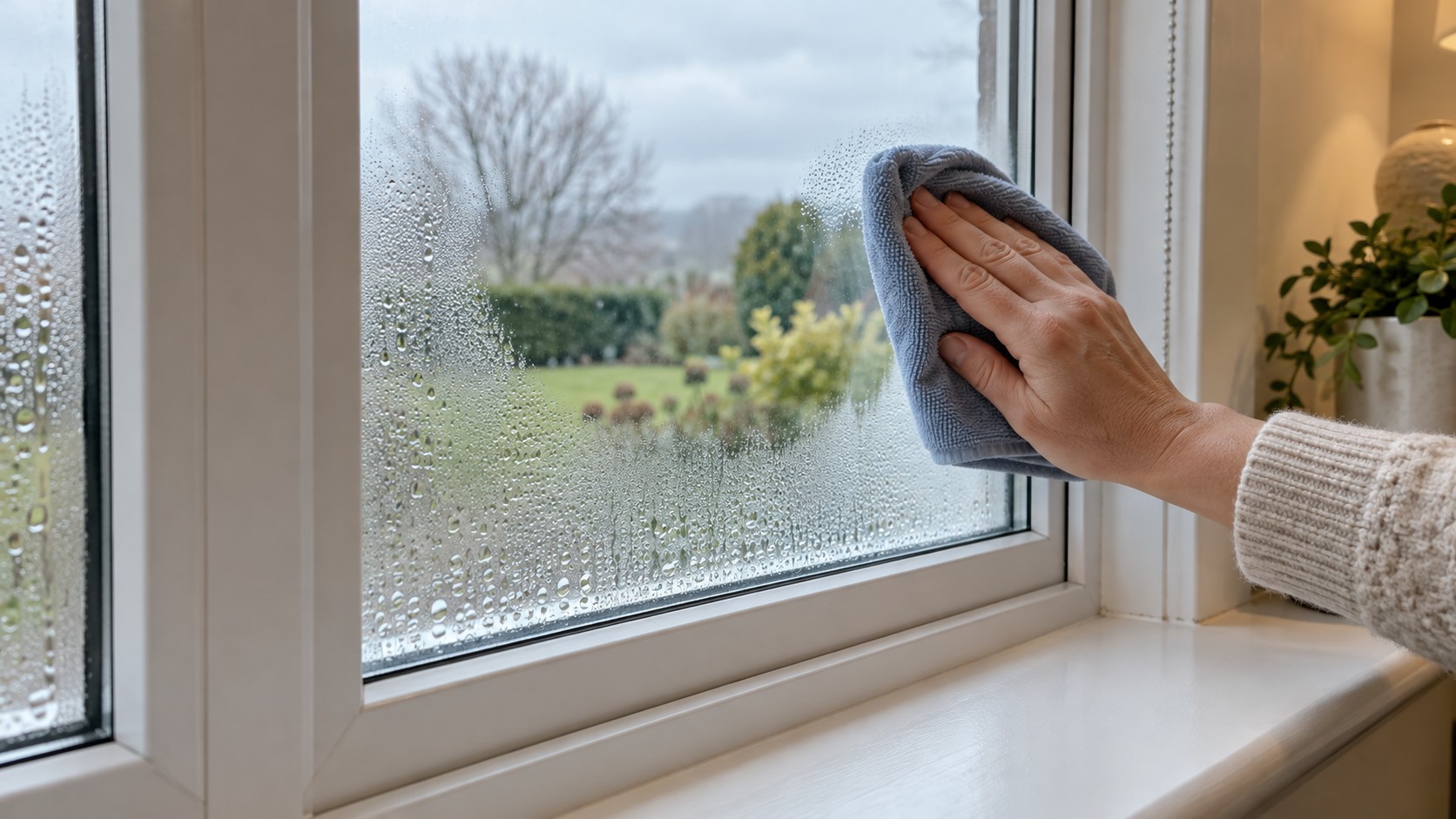
Quick Answer
To reduce window condensation, limit moisture from cooking, showers and drying clothes, use working extractor fans and keep the home’s intended ventilation clear. Remove water from glass and sills before it sits for hours, and keep rooms reasonably warm. Persistent wet windows, recurring mould or unexplained damp patches need further investigation. A dehumidifier may help manage excess moisture, but it cannot repair a leak or replace proper ventilation.
Opening the curtains to find water running down the glass is a familiar winter frustration. Sometimes there is only a light mist. On other mornings, droplets collect along the frame and leave the windowsill wet.
Wiping the glass makes it look better, but the water often returns the following day. That is because removing visible condensation does not explain why it formed.
The useful starting point is to look at moisture, ventilation and cold surfaces together. Everyday activities add water vapour to the air, while colder glass gives that moisture somewhere to condense. Understanding the pattern helps you decide which changes are likely to make a difference.
Why Does Condensation Form on Windows?
Condensation forms when moist air meets a surface cold enough for water vapour to turn into liquid. In winter, window glass can be much colder than the air inside the room.
Cooking, showering and drying laundry all contribute moisture. Breathing adds moisture too, which helps explain why bedroom windows may be wet after a night with the room occupied.
The problem can become more noticeable when moisture builds up faster than ventilation removes it. SEAI identifies everyday household activities as sources of water vapour and explains why appropriate ventilation matters, particularly in well-insulated, airtight homes. SEAI
Condensation does not automatically mean your windows need replacing. First, establish where the water is appearing and when it happens.
Check Where the Moisture Is
Different locations can point towards different causes.
| Where you see moisture | What it may indicate | Useful next step |
|---|---|---|
| On the room-facing glass | Indoor moisture meeting cold glass | Review moisture sources and ventilation |
| On the outside glass | Outdoor condensation | Check whether the indoor surface stays dry |
| Between sealed panes | A possible glazing-unit seal problem | Ask a glazing professional to inspect it |
| Around a frame after rain | Possible water ingress | Record the pattern and arrange an inspection |
| On walls or ceilings | Condensation, a leak or another damp problem | Investigate rather than assuming the cause |
These are starting clues, not a diagnosis. If you cannot tell whether moisture is inside or between panes, dry the accessible surfaces and check what remains.
Photographs taken at different times can help show whether the problem follows cold nights, showers, laundry drying or heavy rain.
1. Remove Standing Water From Glass and Sills
Use an absorbent cloth or a suitable window vacuum to collect visible water. Dry the sill, lower frame and corners where droplets gather.
Avoid simply pushing water from the glass onto the surrounding paintwork. The purpose is to remove it from the surface.
Let a wet cloth dry somewhere suitable rather than leaving it on the sill. Check nearby curtains and blinds too, particularly if they touch the glass.
This is a useful immediate step, but repeated morning wiping should prompt you to investigate the moisture source. It should not become the only response to windows that are soaking wet every day.
2. Check That Intended Ventilation Is Clear
Look for window vents, wall vents and the ventilation system installed in your home. Make sure furniture, curtains or stored belongings are not obstructing them.
Use ventilation controls according to the system’s guidance. Do not tape over permanent vents to stop a draught, especially where ventilation supports a fuel-burning appliance.
If a vent causes persistent discomfort, ask a competent professional to assess the arrangement. Blocking it may create another problem without resolving the original one.
SEAI’s guide to home ventilation systems explains the difference between background ventilation, extract fans and other ventilation options.
3. Use Extractor Fans When Moisture Is Produced
Switch on bathroom extraction when showering and use kitchen extraction when cooking. Where the system has a timer or automatic control, allow it to operate as intended afterwards.
Check whether the fan appears to be working effectively. A noisy fan is not necessarily moving enough air, while a clogged grille can restrict performance.
Clean accessible covers according to the manufacturer’s instructions. Leave electrical work and inaccessible components to someone qualified.
A kitchen hood that recirculates air through filters does not remove water vapour outdoors in the same way as a ducted extractor. Check which type you have before relying on it to control cooking moisture.
4. Review Where You Dry Laundry
Wet laundry releases moisture as it dries. Hanging several loads around the home can make condensation harder to manage, particularly when windows stay closed and extraction is limited.
Use an appropriate drying space with ventilation or moisture control. Leave space between garments and avoid blocking radiators, vents or routes through the room.
Choose a suitable spin setting for the fabric to remove water before hanging clothes. Follow garment labels rather than using the highest setting for everything.
For a separate guide to arranging laundry and managing the moisture it produces, read Stokes’ article on drying clothes indoors without making your home damp.
5. Air Rooms When It Is Practical
Opening an appropriate window can help exchange indoor air, but the right approach depends on your ventilation system, weather and household needs.
Use a safe opportunity to air a room after a moisture-producing activity or when it feels stuffy. Avoid letting rain enter or leaving accessible windows unsecured.
There is no single window-opening duration that suits every property. A small room, a large house and a home with mechanical ventilation can need different arrangements.
If your property has a designed ventilation system, follow its operating instructions. Window opening should complement the arrangement rather than replace a system that requires maintenance.
6. Keep Rooms Reasonably Warm
Cold glass and walls are more likely to collect condensation when indoor moisture remains high. Heating can help maintain warmer surfaces, but it needs to work alongside moisture removal.
Turning the thermostat up while keeping excess moisture trapped indoors is not a complete solution.
Review heating schedules, obvious draughts and radiator obstructions. Avoid allowing frequently affected rooms to remain persistently cold and damp.
Stokes’ guide to keeping your home warm without turning up the heating covers practical ways to improve comfort around the home.
7. Keep Airflow Around Windows and Furniture
Check whether curtains, blinds or furniture create enclosed spaces beside cold surfaces.
Leave suitable clearance around radiators and avoid packing belongings tightly against affected external walls. Open curtains during the day and inspect the areas behind them.
You do not need to rearrange the whole room. Start with the locations where moisture repeatedly appears.
If a cupboard or furniture corner smells musty, inspect it rather than assuming the problem is limited to the window. Restricted airflow can make hidden dampness harder to notice.
8. Use a Dehumidifier as Supporting Equipment
A dehumidifier can remove water from indoor air and may be useful where laundry or other activities produce excess moisture.
Choose equipment suitable for the room and operating conditions. Follow the instructions for placement, airflow clearance, drainage and electrical safety.
Keep the unit maintained and empty its tank as required. Avoid using extensions or positioning it beside water unless the manufacturer permits the arrangement.
A dehumidifier cannot repair damaged gutters, leaking pipes or failed window seals. If you repeatedly collect large amounts of water, review what is producing the moisture and whether the building needs attention.
For broader appliance care, see Stokes’ guide to keeping appliances running longer without overspending.
When Condensation Needs Further Investigation
Arrange an assessment if water repeatedly damages paintwork, timber or surrounding surfaces, or if mould keeps returning.
Other reasons to investigate include damp patches after rain, staining beneath pipes, moisture between panes or a sudden change in a previously dry room.
Do not assume every damp mark comes from everyday household habits. Plumbing, building defects and inadequate ventilation can also require attention.
Tenants should report recurring damp, mould or ventilation faults to the landlord or managing agent. Keep dated photographs and describe when the problem appears.
Avoid drilling window frames, altering ventilation equipment or arranging structural work without the necessary agreement.
A Simple Daily Condensation Checklist
Keep the routine manageable:
- Remove visible water from affected windows and sills.
- Use extraction during cooking and showering.
- Keep intended vents unobstructed.
- Manage laundry in a suitable drying area.
- Check recurring damp locations behind curtains and furniture.
- Record problems that need repair or professional assessment.
You do not need to complete a lengthy inspection every morning. Focus on the affected areas and review whether your changes are helping.
Common Mistakes to Avoid
Treating Wiping as the Whole Solution
Removing water protects surfaces, but recurring condensation still needs a review of moisture and ventilation.
Blocking Every Vent to Keep Heat In
Draught-proofing and intended ventilation serve different purposes. Preserve the airflow the home requires.
Buying Equipment Before Checking the Cause
A dehumidifier may help indoor humidity, but it will not resolve every damp problem.
Assuming New Windows Will Fix Everything
Window replacement should follow an assessment of the property and ventilation needs, rather than being the automatic first step.
Painting Over Recurring Damp
Find and address the cause before making cosmetic repairs.
Frequently Asked Questions
Why are bedroom windows wet in the morning?
Moisture can accumulate while the room is occupied overnight. If the glass becomes cold enough, that moisture condenses on its surface.
Should I wipe condensation off windows?
Yes. Collect the water and dry the sill and frame, while also investigating why the condensation keeps returning.
Will opening a window help?
It can help exchange indoor air when done safely and appropriately. Follow the guidance for your home’s ventilation system.
Can double-glazed windows still get condensation?
Yes. Condensation can form on accessible surfaces depending on moisture and temperature. Moisture between sealed panes needs a different assessment.
Is a dehumidifier enough?
It may help control excess indoor moisture, but it does not replace ventilation or repairs to a leak or building defect.
When should I ask for professional help?
Seek help when condensation is persistent, surfaces are deteriorating, mould returns or the location of damp suggests a leak or glazing problem.
Start With the Pattern, Then Make Changes
Notice when the water appears, where it collects and which activities happen beforehand. Begin with moisture control, working extraction and clear ventilation, then assess whether the problem improves.
If the same areas remain wet or deteriorate, arrange further investigation. Early attention can help you distinguish a manageable household issue from something that needs repair.
Visit Stokes for more home maintenance, energy and sustainability articles.
