


Quick Answer
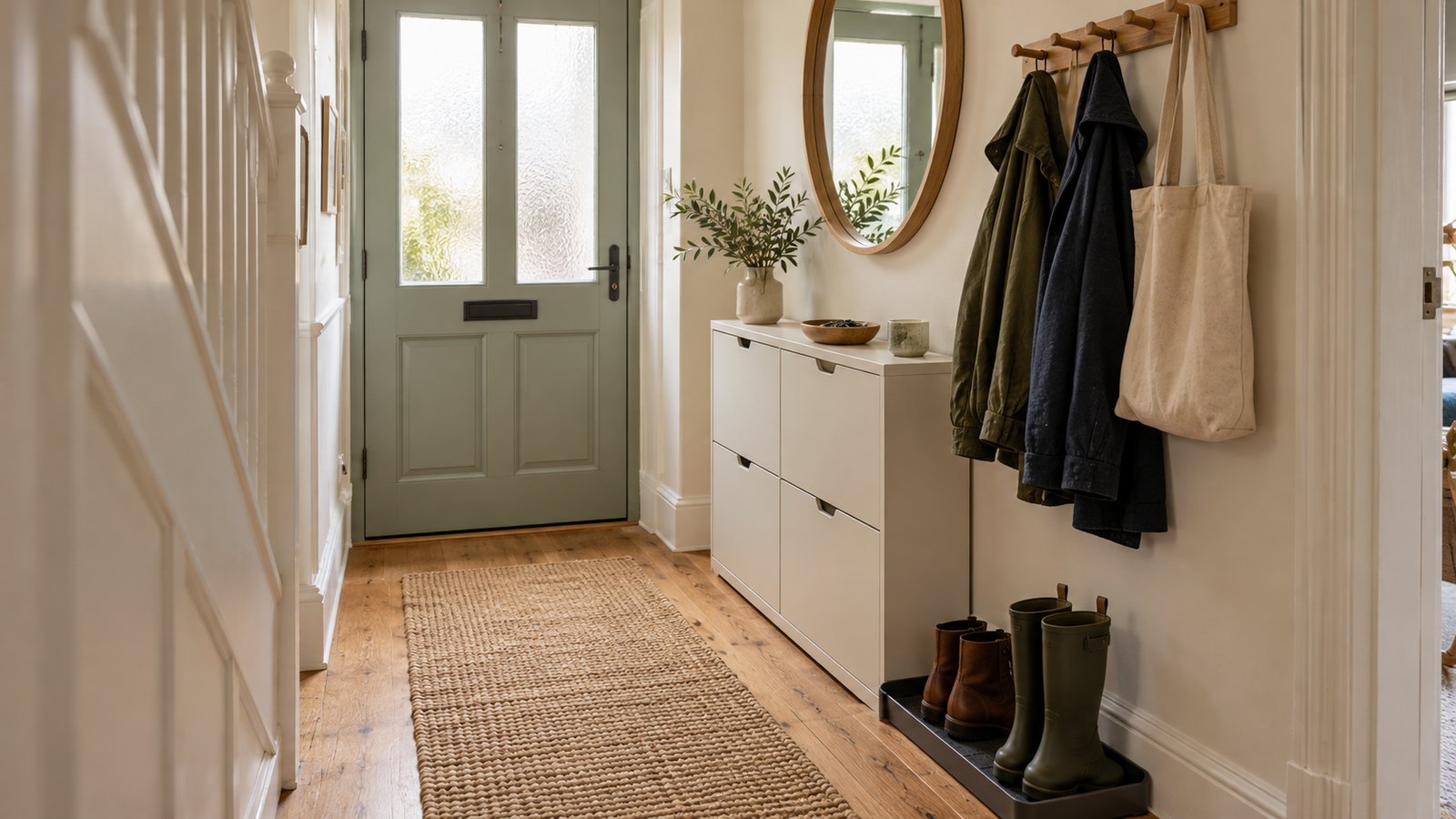
The best small hallway storage ideas start with reducing what you keep beside the door. Give everyday shoes, coats, bags and keys a defined place, then choose shallow storage that leaves enough room to move comfortably. Wall hooks, a narrow shoe cabinet or a compact shelf can work well, depending on your layout. Measure the space and check door openings before buying furniture.
A hallway rarely gets much attention until it becomes difficult to walk through. Shoes gather by the entrance, bags land on the floor and the nearest chair becomes a coat rack. When everyone is trying to leave at once, those small piles suddenly matter.
Adding furniture can help, but it can also make a narrow entrance more awkward. A cabinet might fit against the wall yet leave too little space to carry shopping past it. A bench can look useful until its lid cannot open beneath the coats above.
The starting point is to work out what your hallway needs to hold and how people move through it. These nine ideas will help you create an entrance that is easier to use without filling every available corner.
1. Keep Only Everyday Essentials Near the Door
Before measuring for storage, look at what is already in the hallway.
Separate items you use most days from things that simply ended up there. Everyday shoes and a work bag may deserve convenient space. Holiday luggage, unused coats and parcels waiting weeks to be returned probably need another arrangement.
Choose a realistic limit for each person. That could mean one everyday coat and a couple of frequently worn pairs of shoes, with other items stored elsewhere.
Do not move everything into an unsorted pile in another room. Give those belongings a proper destination and arrange a time to deal with donations, returns or repairs.
A smaller collection makes it easier to choose storage that fits the hallway you actually have.
2. Measure Before Choosing Small Hallway Storage Ideas
Check more than the width of the available wall.
Measure the depth you can spare, the height beneath switches or windows and the position of skirting boards. Then open nearby doors fully and see where their handles and edges travel.
Consider how drawers, cupboard doors and flip-down compartments will open. A shallow cabinet can still need considerable space in front of it during use.
Mark a proposed footprint with removable tape suitable for your floor. Walk past it carrying a bag, basket or other item you regularly bring through the entrance.
This simple check can reveal a problem that product photographs do not show. Leave the hallway comfortable for everyone using it, including anyone who needs additional manoeuvring space.
3. Use Wall Hooks for Frequently Worn Coats
Hooks can give coats and bags an accessible place without adding a large freestanding rack.
Place them where hanging items will not obstruct switches, door handles or the route through the hallway. Remember that a thick winter coat projects further into the room than an empty hook.
Give hooks specific jobs. One might hold your daily bag, while another is reserved for a frequently worn jacket. Filling every hook with several layers makes it harder to find anything.
Check the wall type and use suitable fixings according to the product instructions. In a rented home, confirm permission before drilling and check any removable product’s load limit and surface requirements.
Keep the arrangement manageable. A short row of useful hooks is often easier to maintain than an entire wall covered with belongings.
4. Choose Shoe Storage Around the Shoes You Own
Shoe storage should suit your actual footwear.
A cabinet designed for low shoes may not accommodate ankle boots, larger trainers or several family members’ shoes in the way you expect. Check compartment dimensions rather than relying only on a stated pair capacity.
Think about how you use the space:
| Storage option | Useful for | What to check |
|---|---|---|
| Shallow shoe cabinet | Keeping footwear out of sight | Internal dimensions and opening clearance |
| Open shoe rack | Frequently worn shoes | Depth, stability and cleaning access |
| Low basket | A small collection of casual footwear | Whether shoes become difficult to find |
| Storage bench | Seating and shoe storage together | Walking space and compartment access |
IKEA Ireland’s hallway storage guidance also highlights slim furniture, wall storage and benches as options for compact entrances. Use those examples as inspiration, then check measurements against your own home. ikea.com
5. Add a Small Landing Place for Keys and Post
Keys, sunglasses and letters do not need a full console table.
A compact shelf, an existing drawer or a small tray on suitable furniture may be enough. Choose somewhere convenient when arriving home, while keeping keys out of sight and reach from the doorway or letterbox.
Separate essential items from paperwork. If letters share the same small tray as everything else, they can quickly bury the things you need.
Give post a simple routine. Recycle unwanted material appropriately, move documents to their proper place and keep items requiring action together.
A landing place only works if its contents stay limited. Avoid turning a useful shelf into another surface you have to search every morning.
6. Consider a Storage Bench Only Where It Fits
A bench can be helpful when putting on shoes, especially if sitting down makes the task easier. Built-in storage can also combine two functions in one piece.
However, narrow hallways do not always have enough room for a bench.
Check its full depth, the space needed to sit comfortably and how its storage opens. A lift-up seat may be awkward beneath hanging coats, while drawers require space in front.
Choose furniture designed for seating and follow its assembly and securing instructions. A storage box is not automatically suitable to sit on.
If a bench makes the entrance cramped, leave it out. Seating elsewhere near the entrance may be more practical than forcing furniture into the narrowest section.
7. Plan for Wet Shoes and Coats
Rainy-day belongings need an arrangement that works beyond appearance.
A washable boot tray can help contain water and dirt from wet footwear. Position it where it does not obstruct the route and check it regularly so collected water is not left sitting.
Follow care instructions when drying coats and shoes. Avoid packing wet items directly into crowded enclosed storage.
If the entrance regularly feels damp or develops condensation, investigate the wider moisture and ventilation pattern. Our guide to reducing window condensation in winter explains useful checks.
For laundry drying elsewhere in the home, read how to dry clothes indoors without making your home damp.
8. Make Small Hallway Storage Ideas Work for Everyone
Storage is easier to maintain when the people using it can reach it comfortably and understand where things belong.
In a shared home, allocate space by person or item type. A labelled basket for gloves may work better than several decorative containers with unclear purposes.
If children can safely reach their own coat hook or shoe space, putting things away becomes a more straightforward task. Keep heavy items in appropriate stable storage and follow furniture anchoring instructions where required.
Avoid placing frequently needed belongings on a high shelf simply to make the entrance look tidy. Storage that requires unnecessary effort is more likely to be ignored.
Test the arrangement during a normal morning. That is when inconvenient positions and missing space become obvious.
9. Start with What You Already Own
You may be able to improve the entrance without purchasing a matching furniture set.
An unused tray can hold small essentials. A suitable basket might organise scarves. Clearing an existing cupboard could provide more useful space than buying another cabinet.
Try rearranging first, then make a short list of anything still missing. Keep that list specific: “shallow storage for four everyday pairs of shoes” gives you a clearer buying decision than “hallway furniture”.
If you do buy, compare total dimensions, construction, delivery and assembly requirements. A low purchase price is less appealing if the piece does not fit or cannot do the job.
For further household ideas, browse Stokes’ Home and Garden section.
Common Hallway Storage Mistakes
Choosing Furniture from Photographs Alone
Styled photographs may use a much larger entrance than yours. Check measurements, openings and your walking route before ordering.
Treating More Storage as the First Solution
Extra capacity can hide items that do not need to be near the door. Sort the contents before deciding how much storage is necessary.
Keeping Every Season’s Clothing in the Hallway
Store clean, dry items you rarely use elsewhere when possible. Review the everyday collection when your routine or the weather changes.
Forgetting Maintenance
Boot trays need cleaning, post needs sorting and unused shoes need moving. Leave enough access to maintain the area without dismantling the whole arrangement.
Keep the Entrance Manageable with a Short Reset
At the end of the day, return shoes to their assigned space, hang up the coats in use and put keys where they belong.
Deal with parcels and shopping bags before they become permanent hallway residents. If the same item keeps appearing on the floor, review its intended storage.
The entrance does not have to look untouched. It needs to let people arrive, leave and find their belongings comfortably.
Explore more practical household articles on Stokes.
Frequently Asked Questions
What are the best small hallway storage ideas?
Start with a limited collection of everyday essentials. Then consider hooks, shallow shoe storage and a small place for keys according to your available space.
How do you store shoes in a narrow hallway?
Choose shallow storage and check both footwear dimensions and opening clearance. Keep less frequently worn shoes elsewhere where practical.
Can a small hallway accommodate a storage bench?
Sometimes, but measure the seating area, storage opening and remaining walking space. A bench should make the entrance easier to use.
What can I use instead of a console table?
A compact shelf, suitable existing drawer or small tray may provide enough space for everyday essentials without the depth of a full table.
How can renters organise a hallway?
Start with freestanding furniture and existing storage. Check permission before drilling, and follow removable fittings’ instructions rather than assuming they suit every surface.
How do I stop hallway clutter returning?
Give everyday items clear destinations and remove things that no longer need to be there. A brief daily tidy can help maintain the arrangement.
