


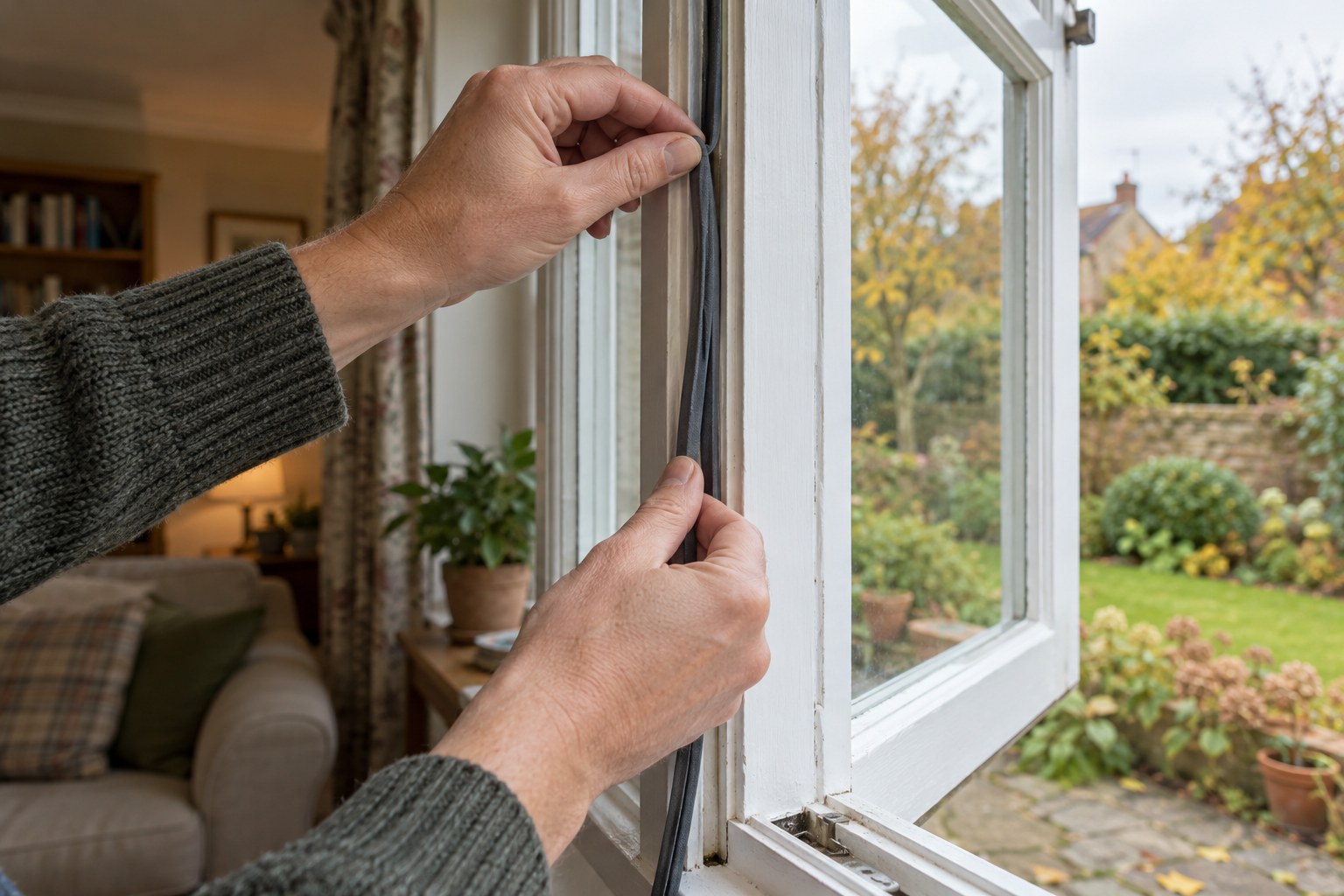
Learning how to draught-proof windows and doors starts with finding where cold air actually enters. A chilly room does not always need replacement windows. Sometimes the problem is a worn seal, a loose letterbox flap or a gap beneath the front door.
The useful first step is a careful inspection. Identify the opening, choose a suitable repair and check that the door or window still closes properly afterwards.
There is an important distinction, though: unwanted draughts and essential ventilation are different things. Your home still needs fresh air, so sealing every visible opening is not the aim.
Check Where the Draught Is Coming From
Choose a cool or breezy day and inspect the rooms that feel uncomfortable.
With external doors and windows closed, move your hand slowly around their edges. Notice whether air enters at one particular corner, along the bottom or around the whole opening.
Look closely at the existing seals. They may be flattened, split, loose or missing. Also check whether the window catches properly and whether the door sits evenly in its frame.
Make a short list before buying anything. A damaged seal needs a different fix from a window that no longer closes squarely.
If the problem is more general, our guide to keeping your home warm without turning up the heating covers other areas worth checking.
How to Draught-Proof Windows Without Affecting the Fit
For opening windows, suitable draught-proofing strips can help close unwanted gaps between the frame and the moving section. The product needs to suit the window’s material, design and gap size. Energy Saving Trust recommends strips for opening windows and stresses the importance of maintaining ventilation. Energy Saving Trust
Before fitting a strip, clean and dry the surface according to the manufacturer’s instructions. Remove loose remains of old adhesive where appropriate.
Avoid assuming that a thicker strip will work better. If it prevents the window from closing or locking normally, it is unsuitable.
After fitting, open and close the window several times. Check the corners and make sure the seal stays in position.
Check Existing Seals Before Adding Another Layer
Some windows already have fitted gaskets. If these are damaged, a compatible replacement may be more appropriate than sticking another strip over them.
A window that catches, drops or leaves an uneven gap may need adjustment or repair. Extra adhesive tape will not correct a mechanical fault.
For sash windows or unfamiliar fittings, ask a suitable repair specialist which approach fits the design.
How to Draught-Proof Doors Around the Edges
External doors can let cold air in around the frame, underneath the door or through fittings such as a letterbox.
Check that the door closes and latches normally before choosing a seal. A poorly aligned door needs attention to its fit rather than increasingly thick strips.
Different gaps call for different products:
| Problem area | What to check |
|---|---|
| Around the frame | Whether the existing seal is worn or missing |
| Beneath the door | Whether a suitable bottom seal or draught excluder would fit |
| Letterbox | Whether the flap closes properly and a compatible cover is available |
| Older keyhole | Whether a suitable keyhole cover can reduce the opening |
| Uneven door gap | Whether hinges, alignment or the frame need repair |
A movable fabric draught excluder can be a simple option beneath an external door. Keep it clear of the opening when people are moving through, and do not let it obstruct an exit.
Choose Draught-Proofing Products That Match the Gap
Before you draught-proof windows and doors, check the product’s stated dimensions and intended use.
Measure the gap as carefully as possible and read the fitting instructions. Consider whether the product suits painted timber, metal or uPVC, and whether it needs adhesive or fixings.
Buying a large pack before checking the fit can leave you with material that does not solve the problem. Where practical, test a small section first.
If you rent, ask the landlord or managing agent before drilling, changing fittings or making permanent alterations. Report damaged windows and doors rather than covering up a repair issue.
Keep Essential Ventilation Clear
Draught-proofing should reduce uncontrolled air leakage while preserving the openings designed to ventilate your home.
Do not seal trickle vents, ventilation grilles or wall vents. Keep ventilation required by fuel-burning appliances unobstructed. Energy Saving Trust warns that adding draught-proofing to an already well-sealed home can worsen indoor air quality if ventilation is inadequate. Energy Saving Trust
Avoid putting sealant or expanding foam into an opening unless you know what it is for. If you are unsure, get advice before blocking it.
The Energy Saving Trust draught-proofing guide explains the difference between unwanted gaps and necessary ventilation.
What If Your Windows Already Have Condensation?
If you regularly wipe water from the glass, consider moisture and ventilation alongside the draught.
Cooking, bathing and drying clothes all contribute moisture indoors. Reducing uncontrolled air leakage does not remove that moisture.
Read our guide to reducing window condensation in winter before making further changes. For households drying laundry inside, our advice on drying clothes indoors without making your home damp is also relevant.
Persistent damp, recurring mould or water entering around a frame needs investigation. Draught-proofing is not a substitute for repairing leaks or addressing inadequate ventilation.
Check the Result Before Moving to the Next Room
Once you draught-proof windows and doors in one room, check the work before repeating it elsewhere.
Make sure:
- Windows close and lock without extra force.
- Doors latch and open freely.
- Seals remain attached at the corners.
- Ventilation openings stay clear.
- Nothing obstructs an exit.
Recheck on a breezy day. If air still enters through the same area, inspect the fit rather than adding more material immediately.
When Is a Repair Better Than More Draught-Proofing?
Loose hinges, damaged frames, faulty catches and doors that have dropped may require repairs.
A seal can address a suitable gap, but it cannot restore rotten timber, correct every alignment problem or stop water entering through damaged construction.
Start with the clearest fault. Repairing one poorly closing window may be more useful than fitting strips around every opening in the house.
Frequently Asked Questions
Can I draught-proof windows and doors myself?
Some products are designed for DIY fitting. Follow the instructions, choose a suitable size and check that the opening still operates correctly. Mechanical faults or damaged frames may need professional attention.
Should I cover window vents to stop cold air?
No. Trickle vents provide intentional ventilation. Keep them clear and investigate unwanted air leaks around the window separately.
Will draught-proofing stop condensation?
Not by itself. Condensation also involves indoor moisture, ventilation and cold surfaces. Sealing gaps without maintaining adequate ventilation can make moisture problems worse.
Do all windows need extra draught-proofing?
No. Modern windows may already have effective seals. Inspect their condition and fit before adding anything.
Does draught-proofing guarantee lower heating bills?
Savings depend on the home, existing gaps, heating use and the quality of the work. Focus on fixing identifiable draughts rather than expecting a particular reduction.
A careful approach is usually more useful than a house-wide shopping list: find the gap, fit the right solution and check the result.
