


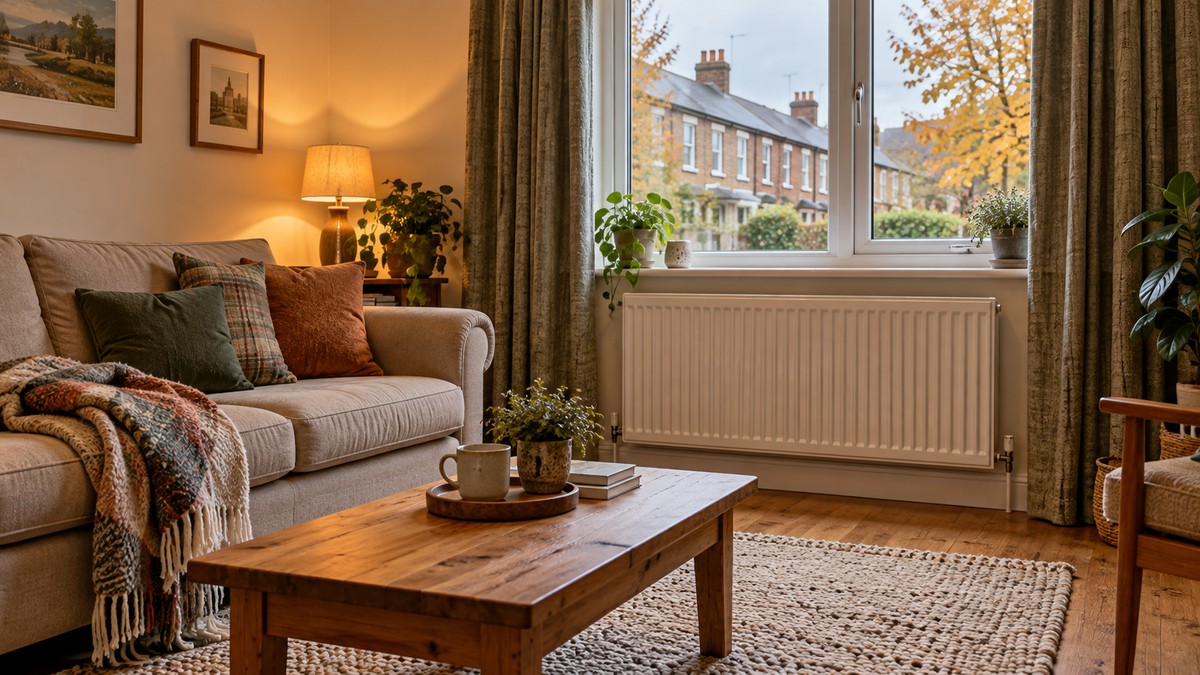
A room can feel cold even when the heating has been running for hours. You might notice a draught around the sofa, chilly floorboards beneath your feet or a window that never seems to keep the cold out. Turning up the thermostat is an easy response, but it does not address why the room is uncomfortable.
For many UK households, a better starting point is to look at where warmth escapes and how heat moves around the home. Small changes to curtains, furniture placement and draughty gaps can help make rooms more comfortable. Larger problems, such as inadequate insulation or persistent damp, need a more considered approach.
The aim is to make better use of the heating you already have while keeping the home properly ventilated.
Quick Answer: How Can You Keep Your Home Warm?
To keep your home warm without immediately increasing the heating, check for unwanted draughts, close curtains after dark, keep radiators clear and review your heating schedule. Use rugs and suitable window coverings to improve comfort. Keep intentional ventilation openings clear, and investigate persistent cold spots or damp before making insulation changes.
Find Out Where Your Home Feels Cold
Before buying anything, spend a little time noticing how different rooms feel.
Is the sitting room comfortable during the afternoon but chilly after sunset? Does the hallway feel cold whenever someone opens the front door? Is one bedroom consistently colder than the rest of the house?
These details help you identify the problem. A draught around a window needs a different response from a radiator hidden behind a large sofa.
Walk through the home on a cool day and check:
- The edges of external doors and opening windows.
- Letterboxes and gaps beneath outside doors.
- The position of furniture around radiators.
- Curtains that cover heat sources.
- Cold floors and recurring patches of condensation.
Make a short list of the rooms that need attention. Starting with the spaces you use most often makes the work easier to prioritise.
Reduce Unwanted Draughts Around Doors and Windows
An unwanted draught can make a room uncomfortable even when the air temperature seems reasonable.
Check whether external doors close properly and whether the seals around windows are damaged or missing. Suitable draught-proofing strips, letterbox covers and door-bottom seals can help reduce uncontrolled air movement.
Choose products that suit the opening. A strip that is too thick may stop a window from closing, while an unsuitable adhesive may come loose quickly.
However, sealing gaps must go hand in hand with adequate ventilation. Do not cover trickle vents, air bricks or ventilation needed by combustion appliances. Energy Saving Trust distinguishes unwanted draughts from controlled ventilation, which helps manage moisture inside the home. Energy Saving Trust
If a room already has condensation problems, seek advice before adding further draught-proofing.
Close Curtains When Daylight Fades
Curtains are worth reviewing before you spend money on more substantial improvements.
During daylight hours, open them to let natural light into the room. If sunshine reaches the windows, avoid blocking it unnecessarily. Once daylight fades, close the curtains so the room feels more sheltered from cold window surfaces.
Check the fit as well as the fabric. A curtain that leaves a large gap at the side may do little for a draughty window. Thermal-lined curtains can be worth considering when existing curtains need replacing, although the benefit depends on the window and installation.
Be careful around radiators beneath windows. Long curtains hanging over a radiator can interfere with heat reaching the room. Adjust their position so the radiator can warm the space you actually use.
For rented homes, check before changing curtain fittings or installing permanent window treatments.
Give Radiators Space to Warm the Room
Furniture placement can affect how comfortable a room feels.
A sofa pressed against a radiator leaves less space for warm air to circulate. Heavy curtains and tightly fitted decorative covers can also restrict heat reaching the room.
Try moving large furniture away from radiators where the layout allows. You do not need to redesign the entire room; even a modest adjustment may make the space more practical.
Avoid using radiators as a permanent drying rack. Clothes can obstruct heat, and drying laundry indoors adds moisture that needs to be managed through ventilation.
If a radiator remains cold while others warm up, investigate the fault. The cause might involve trapped air, the radiator valve or the wider heating system. Follow the system’s guidance, and ask a qualified heating professional when the issue is unclear.
Review Your Heating Schedule
A heating schedule should reflect how you live.
If your household routine has changed, the settings may no longer make sense. You might be heating rooms well before anyone uses them or finding that the heating switches off before the evening is over.
Check the clock on the programmer and review weekday and weekend settings. Make sure you understand what the room thermostat, timer and thermostatic radiator valves each control.
Change one setting at a time, then see how the home responds. This makes it easier to judge whether an adjustment improves comfort.
Avoid choosing settings solely because they sound economical. The right approach depends on the building, heating system and household’s needs. Persistent discomfort deserves investigation rather than repeated thermostat changes.
Make Cold Floors More Comfortable
Cold floors can make a room feel unwelcoming, particularly where people sit for long periods.
A rug beside the bed or beneath a seating area can improve comfort underfoot. Choose a suitable underlay to help prevent slipping, and keep edges away from doorways and busy walking routes.
Rugs are a practical comfort measure, but they do not resolve every cause of a cold floor. Strong draughts through floorboards or a consistently cold ground-floor room may require a closer look at the building.
For homes with suspended timber floors, professional advice can help establish whether floor insulation is appropriate and how ventilation beneath the floor should be maintained.
Start with what you can observe, rather than assuming that a new floor covering will solve the problem.
Keep Moisture Under Control
A warm home also needs a sensible way to manage everyday moisture.
Cooking, showering and drying clothes indoors all release water vapour. If that moisture collects on cold surfaces, condensation can develop.
Use functioning extractor fans when cooking and bathing, and keep existing ventilation openings clear. Where possible, dry washing outdoors. When indoor drying is unavoidable, consider how moisture will leave the room.
Do not assume every damp patch is caused by condensation. Leaking pipes, damaged roofing and other building defects can also be responsible. Energy Saving Trust advises identifying the cause of damp and maintaining ventilation when making energy improvements. Energy Saving Trust
A dehumidifier may help manage indoor moisture in some circumstances, but recurring damp still needs its underlying cause investigated.
Look After Appliances Before Replacing Them
Preparing a home for colder weather often brings a list of possible purchases. Before replacing everything at once, check what can be maintained or repaired.
Read the manufacturer’s instructions for routine cleaning and care. Keep accessible filters clean where required, and pay attention to changes in how appliances operate.
Stokes’ guide to keeping appliances running longer without overspending explains the importance of identifying faults and checking replacement-part compatibility.
The same careful approach is useful when reviewing home comfort. Identify the problem first, then decide whether maintenance, a small adjustment or a larger improvement is appropriate.
Consider Insulation When Small Changes Are Not Enough
Draught-proofing, curtains and furniture adjustments have limits.
If the home loses warmth quickly after the heating switches off, or several rooms remain difficult to heat, insulation may deserve closer attention.
The right improvement depends on the property. Wall construction, roof access, existing insulation, moisture conditions and ventilation all influence what is suitable.
Ask an installer to explain:
- Which part of the home the proposed work will improve.
- How existing damp or defects will be addressed.
- What ventilation arrangements are needed.
- Whether permissions or other checks apply.
- What the quotation includes.
Energy Saving Trust’s home ventilation guidance explains why insulation and draught-proofing improvements should be considered alongside ventilation. Energy Saving Trust
Start With One Room
You do not need to tackle the whole house in a weekend.
Choose the room where cold causes the most inconvenience. Check its windows, doors, radiator position and curtains. Make a few practical changes, then observe whether the room feels more comfortable.
Keep notes on problems that remain, particularly damp patches, recurring condensation or heating faults. These observations can help when you speak to an installer, landlord or heating professional.
For more household and sustainability reading, explore Stokes.
Frequently Asked Questions
How Can I Make My Home Feel Warmer on a Small Budget?
Start by checking unwanted draughts, closing curtains after dark and moving furniture away from radiators. A rug can improve comfort on a cold floor. Focus on a specific problem before buying products.
Should I Close Window Vents During Winter?
Keep intentional ventilation openings clear. They help manage moisture and maintain airflow. Draught-proofing should target unwanted gaps rather than ventilation designed into the building.
Do Thick Curtains Help a Cold Room?
Suitable curtains can improve comfort around windows, particularly after dark. Their fit and position matter. Avoid letting them cover radiators or obstruct vents.
Why Is One Room Colder Than the Others?
Possible causes include draughts, exposed outside walls, differences in insulation or a radiator problem. Check the room’s layout and heating first, then investigate problems that persist.
Will a Rug Fix a Cold Floor?
A rug can make the floor more comfortable underfoot. It will not fix major air leaks, damp or inadequate insulation, so persistent problems may need further assessment.
What Should Tenants Do About a Persistently Cold Home?
Record the problem and report heating faults, damaged windows or damp to the landlord or managing agent. Check before making permanent alterations, and keep a written record of the issue and any response.
