


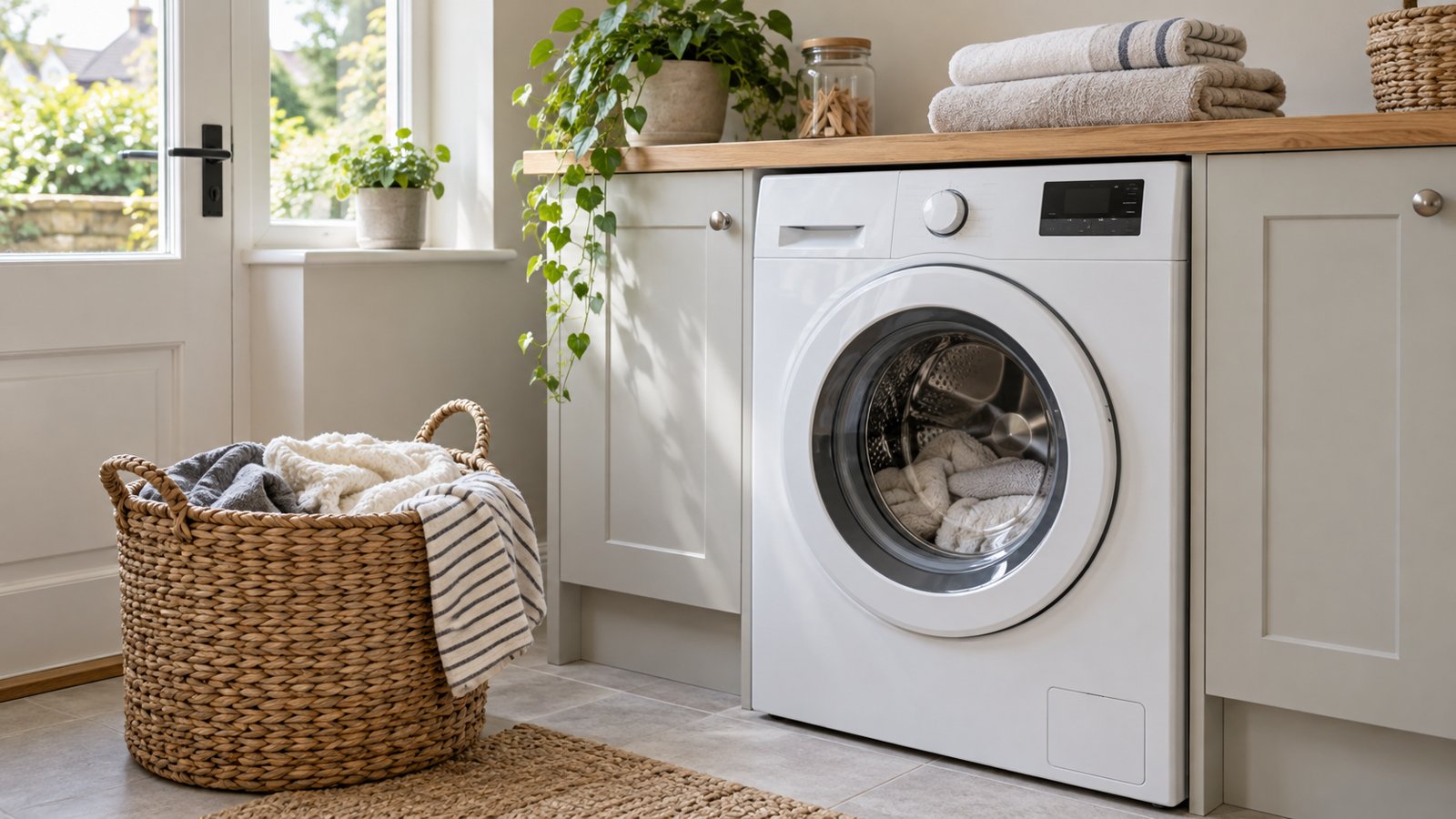
Is eco wash cheaper than a quick wash? Often, an eco programme uses less electricity despite taking longer. However, the fairest comparison depends on the programmes, load sizes and temperatures involved.
A short cycle is not automatically the cheapest. The time shown on your washing machine tells you how long the programme takes, rather than how much electricity it will use.
To compare your options properly, check the programme information in your machine’s manual. Then consider whether each setting suits the clothes you need to wash.
Why Is Eco Wash Cheaper on Many Machines?
Eco programmes are designed to use resources efficiently. They can take longer while using less energy than other programmes suitable for the same laundry.
Energy Saving Trust recommends using the washing machine’s eco cycle and explains that it takes longer but uses less energy. It also recommends cooler cycles for clothes that need freshening rather than a heavy clean. Energy Saving Trust
The useful lesson is that programme duration and electricity consumption are different things.
Think of the timer as a scheduling tool. To understand cost, look for the programme’s energy consumption, usually expressed in kilowatt-hours, or kWh.
Eco Wash vs Quick Wash: What Should You Compare?
Before choosing a programme, check these details in the appliance manual.
| What to check | Why it matters |
|---|---|
| Electricity consumption in kWh | Helps estimate the electricity cost |
| Maximum programme load | A quick cycle may allow less laundry |
| Suitable fabrics | Not every programme suits every garment |
| Recommended level of soiling | Lightly worn clothes and dirty laundry need different treatment |
| Programme temperature | Heating water affects energy use |
| Spin setting | Influences how wet clothes remain afterwards |
A comparison is less useful if one programme washes a full suitable load while another handles only a few items.
You should also compare cleaning results. A cycle that leaves clothes needing another wash may not be the economical choice for that load.
When Does a Quick Wash Make Sense?
A quick wash can be useful when you need a small number of suitable items cleaned promptly.
However, check the maximum load before filling the drum. The machine’s overall capacity does not necessarily apply to every programme.
For example, a washing machine sold with a large drum may have a much smaller allowance for its shortest cycle. Follow the programme table rather than assuming all settings can handle the same basket of clothes.
Choose a quick wash because it suits the laundry and your schedule, rather than simply because its timer is shorter.
How to Calculate Your Washing Machine’s Electricity Cost
Use this calculation:
Electricity cost per cycle = programme consumption in kWh × your electricity unit rate
For example, suppose a programme uses 0.6 kWh and your electricity costs 30p per kWh:
0.6 × £0.30 = £0.18 per cycle
Another programme using 0.9 kWh at the same rate would cost:
0.9 × £0.30 = £0.27 per cycle
These are illustrative figures, not measured costs for your machine. They exclude detergent, water charges where applicable and drying costs.
Use your own electricity bill and appliance information. If your tariff has different prices at different times, use the rate that applies while the machine operates.
Is Eco Wash Cheaper for Every Laundry Load?
Not necessarily. The right programme must suit the fabrics, care labels and level of dirt.
For lightly soiled clothing, a cooler wash may be appropriate. Energy Saving Trust identifies temperature and load size as important factors and recommends avoiding unnecessary half loads where possible. Energy Saving Trust
However, follow garment instructions and the appliance manual when items need a particular cleaning process. Do not select a programme on cost alone if it is unsuitable for the load.
The same applies to drum capacity. Aim for a suitable full load without packing clothes so tightly that they cannot move properly.
Remember the Cost of Drying
Washing is only part of the laundry routine. Think about how the clothes will dry afterwards, especially during winter.
Check which spin settings the fabrics can tolerate and avoid leaving wet laundry sitting in the machine unnecessarily.
If you use an indoor airer, plan where it will stand and how moisture will leave the room. Our guide explains how to dry clothes indoors in winter without making your home damp.
For appliances elsewhere in the kitchen, read our comparison of dishwasher use versus washing up by hand.
Simple Habits That Can Reduce Laundry Energy Use
Start with changes that work with your existing appliance:
- Read the programme table before choosing a cycle.
- Use an appropriate eco programme when it suits the load.
- Choose lower temperatures when suitable for the clothes.
- Avoid running several unnecessarily small loads.
- Treat visible stains according to garment and product instructions.
- Follow the manufacturer’s maintenance guidance.
For further information, see the Energy Saving Trust guide to saving energy when using your washing machine.
Frequently Asked Questions
Is Eco Wash Cheaper Even Though It Takes Longer?
It can be. A longer programme does not automatically consume more electricity. Compare the kWh figures for suitable programmes on your own machine.
Is a 15-Minute Wash Always the Cheapest?
No. A short duration alone does not establish the cost. Check electricity consumption, load restrictions and whether the programme will clean the clothes adequately.
Can You Put a Full Load on Quick Wash?
Only if the manufacturer allows it for that programme. Check the manual because the quick-wash limit may be lower than the machine’s advertised capacity.
Should You Use Eco Wash Every Time?
Use it when it suits the fabrics and cleaning requirements. Other loads may need a different programme, so follow care labels and manufacturer guidance.
How Do You Find the Cheapest Suitable Programme?
Compare the energy figures in your manual, apply your electricity rate and check the permitted load. Choose the lowest-cost option that still meets the laundry’s needs.
