


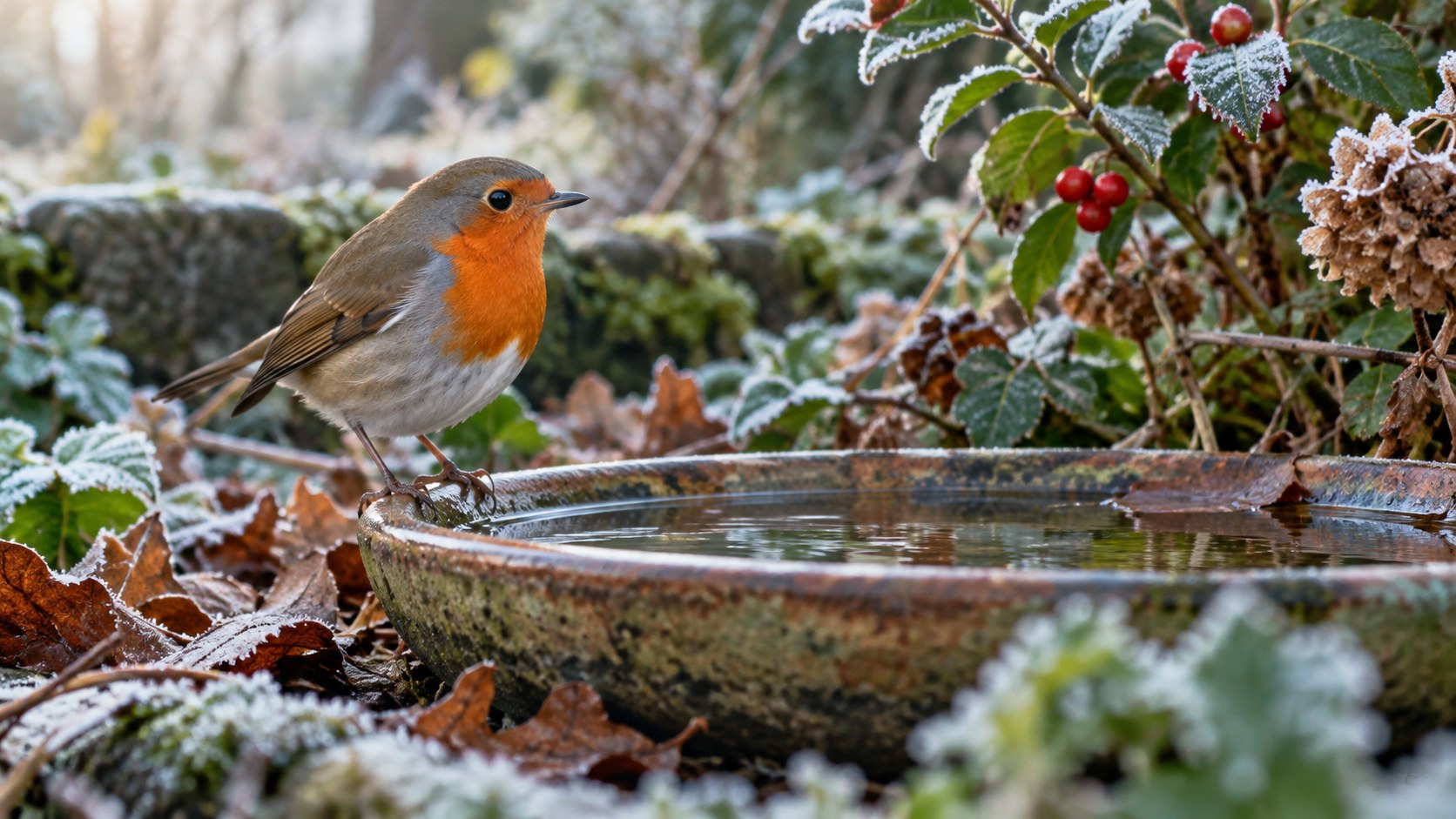
As temperatures drop and the days get shorter, gardens can become valuable places for birds, insects and other wildlife to find food and shelter. If you are wondering how to help garden wildlife in winter, you do not need a large garden or an expensive project to make a difference.
A pile of leaves in a quiet corner, a shallow dish of water or a little less autumn tidying can all create opportunities for wildlife. The key is to make small changes that suit your space and leave them undisturbed where possible.
Here are seven practical ways to make your garden more welcoming during the colder months.
1. Leave Some Fallen Leaves
It is tempting to clear every fallen leaf as soon as autumn arrives. However, leaves gathered beneath shrubs or in a quiet corner can provide shelter for small creatures.
You do not have to leave paths and steps covered. Clear the areas you use regularly, then move some leaves to a sheltered spot away from the house.
If you already have a compost area, fallen leaves can also be collected there. Keep an eye on the pile when you return to garden jobs in spring, as wildlife may be sheltering underneath.
Simple idea: Leave a small leaf pile under a hedge rather than clearing the entire garden.
2. Provide Fresh Water
Finding water can be difficult for wildlife during cold or dry spells. A shallow, stable dish of water in a quiet spot is a simple place to start.
Check it regularly, refresh the water and clean the dish. If it freezes, replace the ice with fresh water. Do not add salt, chemicals or antifreeze.
The National Biodiversity Data Centre recommends leaving a shallow dish of water as one way to help hedgehogs and other garden wildlife. biodiversityireland.ie
You can place a separate birdbath where birds have a clear view of their surroundings and nearby cover. Keep it clean and away from places where cats can easily hide.
3. Leave Seed Heads and Some Plant Stems
A completely cleared flower bed may look tidy, but leaving some plants standing over winter can be useful for wildlife.
Seed heads can provide food for birds, while stems and sheltered areas around plants may offer places for insects to spend the colder months. You can always tidy the bed gradually when the weather improves.
Focus on the plants that are safe to leave. Remove anything diseased or causing an obstruction, and keep walkways clear.
If your garden is small, even one pot with suitable plants can contribute to a more varied outdoor space.
4. Create a Quiet Shelter
A corner that is left relatively undisturbed can be valuable. A small pile of logs, twigs and leaves beneath a hedge or shrub gives wildlife places to hide from the weather and predators.
You do not need to buy a specialist shelter to begin. Use natural materials already available in your garden, but make sure the pile is stable and away from paths, drains and areas where children play.
Before moving an established pile, check it carefully. Animals may be using it, so avoid disturbing a nest or shelter unnecessarily.
The National Biodiversity Data Centre’s guide to helping hedgehogs provides more ideas for making gardens suitable for them. biodiversityireland.ie
5. Feed Garden Birds Responsibly
If you decide to feed birds, choose suitable bird food and offer a manageable amount. Place feeders where you can reach them for regular cleaning and where birds have a good view of the surroundings.
Keep feeding areas clean and remove old or spoiled food. If you notice sick birds around a feeder, stop feeding temporarily and follow advice from a wildlife organisation before restarting.
You do not need to fill every corner with feeders. A clean feeding station and a regular supply of fresh water can be a practical starting point.
Also remember that plants, berries and seed heads can provide natural food. Where possible, keep a mix of shrubs and plants in your garden rather than relying only on feeders.
6. Check Before Cutting or Clearing
Winter garden jobs can disturb wildlife hiding in long grass, leaf piles, hedges and sheds. Before using a strimmer or moving a pile of garden material, take a few minutes to check the area carefully.
If you find an animal, give it space and avoid handling it unnecessarily. For an injured animal or one that appears to need help, contact a local wildlife rescue organisation for advice.
This is especially useful when preparing a garden for winter. A quick check before you start can help you complete the job without disturbing an animal sheltering nearby.
7. Plan Ahead for Spring Flowers
Winter is also a good time to think about what your garden will offer in the months ahead.
When choosing plants, consider a variety that can provide flowers across different seasons. Native plants and pollinator-friendly choices can help provide food and shelter for local wildlife. Check that any plant suits your garden’s soil, available light and space before buying it.
You do not need to redesign the whole garden. A few suitable plants added gradually can be easier to maintain and more affordable.
How to Help Garden Wildlife in Winter in a Small Space
A small garden, patio or balcony can still offer useful resources. Start with the space you have rather than trying to copy a large garden.
You could try:
- A shallow dish of fresh water in a stable position.
- A pot with suitable plants that provide flowers or seeds.
- A small bird feeder that you can clean regularly.
- A sheltered corner with leaves or twigs, if space allows.
- Fewer pesticides and more careful checking before garden maintenance.
Make sure anything placed on a balcony is secure and suitable for the building. If you share an outdoor area, agree any changes with the people who use it.
How to Help Garden Wildlife in Winter Without Spending Much
Many helpful changes involve using what you already have. A shallow dish, a few fallen leaves and a quiet corner may be enough to get started.
Before buying new products, look at your garden and ask:
- Is there somewhere wildlife can find water?
- Are there sheltered areas that could be left alone?
- Are there plants with seeds or berries that can remain over winter?
- Can I reduce the use of garden chemicals?
- Are there safe places for birds to feed and rest?
Start with one or two changes and see what works. You can build on them over time without making the garden difficult to use.
For more everyday ideas that can reduce waste, read our guide to how to reduce food waste at home.
Keep Your Garden Useful for People Too
A wildlife-friendly garden should still work for the people who live there. Keep entrances, paths and drains clear, and store tools safely after use.
You can choose specific areas to leave undisturbed while keeping the rest of the garden tidy. A leaf pile beneath a hedge does not need to take over the patio, and a birdbath can be placed where it will not obstruct a walkway.
If you are preparing the rest of your home for colder weather, our guide on how to draught-proof windows and doors covers another useful seasonal job.
And if you are making space for garden supplies, these kitchen cupboard organisation ideas can help you think about using existing storage before buying more.
Frequently Asked Questions
How can I help garden wildlife in winter?
Provide fresh water, leave some natural shelter and avoid clearing every leaf or plant stem. If you feed birds, keep feeders clean and offer suitable food.
Should I leave fallen leaves in my garden?
Leaving some leaves beneath shrubs or in a quiet corner can provide shelter. Clear leaves from paths and steps to keep them safe to use.
What water should I leave out for wildlife?
Fresh water in a shallow, stable dish is a simple option. Check it regularly, clean the dish and replace frozen water without adding chemicals.
Can I help wildlife if I only have a balcony?
Yes. Depending on the space and building rules, a secure water dish, suitable plants or a well-maintained bird feeder may help visiting wildlife.
Should I clear all my garden plants before winter?
You do not have to clear every plant. Leaving suitable seed heads and stems can offer food or shelter, while damaged or obstructing plants can still be removed.
How do I help hedgehogs in winter?
Provide a shallow dish of fresh water and leave quiet, sheltered areas undisturbed. Check leaf piles and long grass carefully before moving them or using garden tools.
What should I do if I find injured wildlife?
Give the animal space and contact a local wildlife rescue organisation for advice. Avoid handling it unless the rescue team advises you how to do so safely.
