


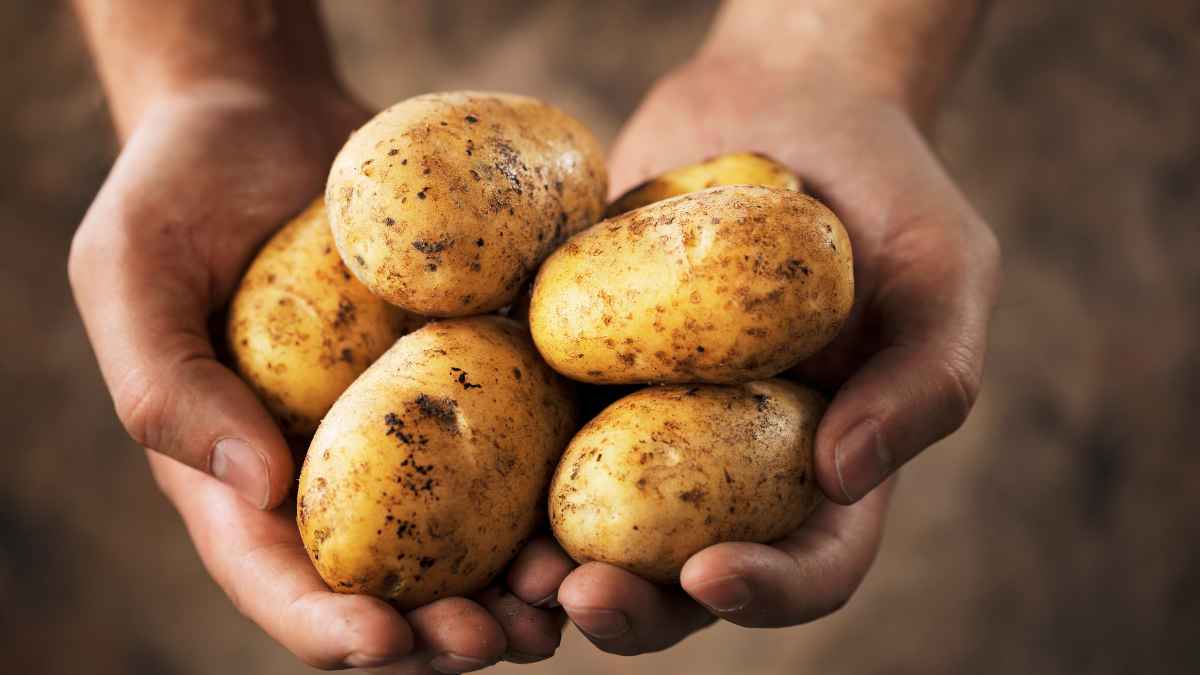
Quick answer: Researchers studying genetically engineered potatoes reported up to 30% greater tuber mass per plant than control plants in an Illinois field trial affected by heatwaves. The findings show potential for protecting crop yields, but they do not establish that the potatoes will perform equally well in every climate.
Potatoes are an important food crop, but maintaining reliable harvests becomes more challenging when growing conditions change. Research into how plants cope with heat could help scientists develop crops better suited to those pressures.
A study published in December 2024 examined whether changing a process linked to photosynthesis could improve potato performance. Researchers from the University of Illinois Urbana-Champaign and the University of Essex found encouraging results in field-grown plants.
The work offers a promising research direction. However, the distinction between a successful experiment and a variety ready for widespread farming remains important.
What Did the Potato Study Find?
The researchers engineered an alternative photorespiratory pathway into potatoes and compared their performance with unmodified control plants.
In the 2022 field experiment, one engineered line produced approximately 30% greater tuber mass per plant than the control. Another engineered line showed a smaller increase of about 14%. The growing season included early heatwaves with daily maximum temperatures above 35°C.
“Tuber mass” means the combined weight of the harvested potatoes. It should not be interpreted automatically as 30% more individual potatoes or a guaranteed increase for every farm.
Readers can explore the original study, Shortcutting Photorespiration Protects Potato Photosynthesis and Tuber Yield Against Heatwave Stress, published in Global Change Biology.
For related reporting on how changing conditions affect the natural world, visit Stokes’ climate coverage.
How Photorespiration Affects Plant Growth
Photosynthesis allows plants to use sunlight to help turn carbon dioxide into the sugars needed for growth.
However, an enzyme involved in that process, called Rubisco, sometimes reacts with oxygen instead of carbon dioxide. This triggers photorespiration, a recovery process that uses energy and can release previously captured carbon.
The problem becomes more significant at higher temperatures. More resources can be directed towards dealing with the products of this reaction rather than supporting growth.
The researchers introduced two genes to create an alternative processing route. The aim was to reduce the cost associated with the plant’s usual photorespiratory pathway and improve its efficiency under challenging conditions.
This is more precise than saying the scientists simply “increased photorespiration”. They changed how the plant handled part of the process.
Why the Findings Matter for Food Security
A reliable food supply depends partly on crops producing useful harvests despite difficult growing seasons.
For a farmer, a reduction in yield can affect income, planning and the amount of food available to sell. For households, disruptions to production can contribute to uncertainty around supply and affordability.
Research that helps crops maintain productivity therefore has potential value beyond a single harvest. However, greater yield in an experimental plot is only one part of the picture.
A useful crop also needs to suit local growing conditions, farming practices and the needs of the people who grow and eat it. Storage performance, disease resistance, production costs and consumer preferences all matter when assessing its practical value.
The potato study provides evidence about a particular biological approach. It does not resolve all of those wider questions.
Did the Changes Affect Potato Quality?
The researchers also examined tuber quality. They reported that the yield improvements were not accompanied by a reduction in the nutritional quality assessed in the study.
That is an important finding, because producing more food is not the only goal of crop research. The resulting harvest must also retain useful food qualities.
Nevertheless, a finding about the characteristics measured in one study should not be treated as a substitute for every assessment required before a crop reaches farmers or consumers.
Yield, nutritional composition, food safety and suitability for commercial production are related questions, but they are not interchangeable.
Why More Field Trials Are Needed
The published research used field experiments at a single location. Performance varied between growing seasons: the leading engineered line showed a smaller yield improvement in 2020 than in 2022.
That variation helps explain why wider testing matters.
A result from one location cannot establish how the same plants would perform across different soils, rainfall patterns, temperatures and farming systems. Trials in additional environments would help researchers understand where the approach works well and where its benefits may be limited.
The University of Essex’s announcement explicitly identified multi-location field trials as a necessary next step. It did not establish that those trials had already been completed.
It would therefore be premature to describe the potatoes as a proven solution for all heat-affected growing regions.
Heat Tolerance Is Different from Climate-Proofing
The phrase “heat-resistant potatoes” is a useful shorthand, but it needs context.
Better performance during heat stress does not automatically demonstrate resistance to drought, flooding, pests or disease. A plant can cope better with one pressure while remaining vulnerable to another.
Likewise, improved photosynthesis cannot remove the need for suitable soil, water and crop management.
The research is best understood as one possible contribution to climate adaptation. Its potential lies in helping crops function more effectively under particular conditions, alongside other improvements in breeding and farming.
Stokes’ biology section covers more research into the processes that shape living organisms and their responses to the environment.
What Could This Mean for Irish Agriculture?
The findings are relevant to discussions about crop resilience, but they do not demonstrate the same yield increase under Irish growing conditions.
Before drawing conclusions for Ireland, researchers would need evidence from suitable local trials. An approach that performs well during an Illinois heatwave may behave differently in another climate or potato variety.
For growers, the practical questions would include whether the crop provides a consistent benefit, fits existing production systems and meets relevant requirements.
The immediate value of the study is scientific: it shows that modifying photorespiration can improve potato performance in the conditions tested. Any future agricultural application needs to build on that evidence carefully.
A Promising Step, with Important Questions Remaining
The study adds to research exploring whether improvements in photosynthesis can help protect food production.
Its strongest finding is specific: engineered potato plants achieved higher tuber mass than controls in the reported field experiments, including a season affected by heatwaves.
The next challenge is establishing how consistently those benefits can be reproduced and whether they translate into practical advantages for growers.
For more reporting on environmental research and sustainability, explore Stokes.
Frequently Asked Questions
What are heat-resistant potatoes?
In this research, the term describes genetically engineered potatoes designed to maintain better photosynthetic performance under heat stress. It does not mean they are immune to extreme weather.
Did the researchers grow 30% more potatoes?
The main reported result was approximately 30% greater tuber mass per plant in one engineered line during the 2022 trial. That refers to harvested weight rather than necessarily the number of potatoes.
How were the plants modified?
Researchers introduced an alternative photorespiratory pathway intended to reduce the resource costs associated with the plant’s normal processing route.
Did the potatoes retain their nutritional quality?
The researchers reported no reduction in the nutritional quality assessed in the study. This finding should be understood within the scope of the measurements taken.
Will these potatoes perform equally well in Ireland?
The study does not establish that. Testing under Irish growing conditions would be needed before predicting local performance.
Can heat-resistant potatoes solve climate-related food insecurity?
They could contribute to crop resilience if further research supports their use. Food security also depends on farming resources, distribution, affordability and other environmental pressures.
